Constructor takes second place in the Imola round of A2RL


 Back to top
Constructor Racing, the team run by Constructor Labs, finished second at Imola, Italy, on 5 September 2026 in the first multi-car autonomous race ever held in Europe. Kinetiz (the team that runs under the UAE flag and includes researchers from Nanyang Technological University in Singapore) won the twelve-lap race. Constructor was one of only two cars to finish.
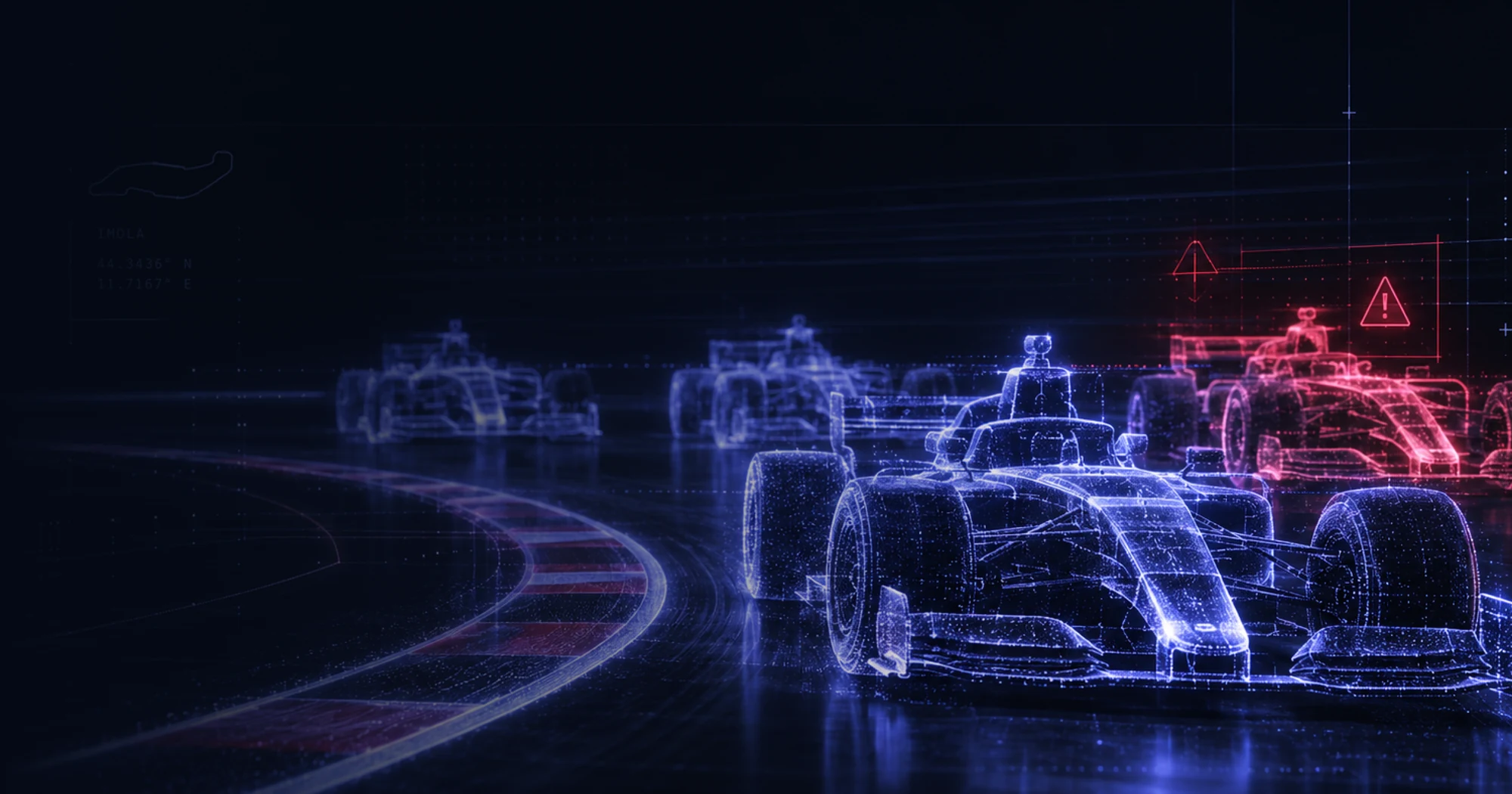
The race ran over twelve laps as part of ACI Racing Weekend at the Autodromo Internazionale Enzo e Dino Ferrari in Imola, Italy. A2RL, the Abu Dhabi Autonomous Racing League, is organized by ASPIRE, the grand-challenges team of Abu Dhabi’s Advanced Technology Research Council. Its first two seasons ran at Yas Marina Circuit; Imola was its first event outside the UAE.
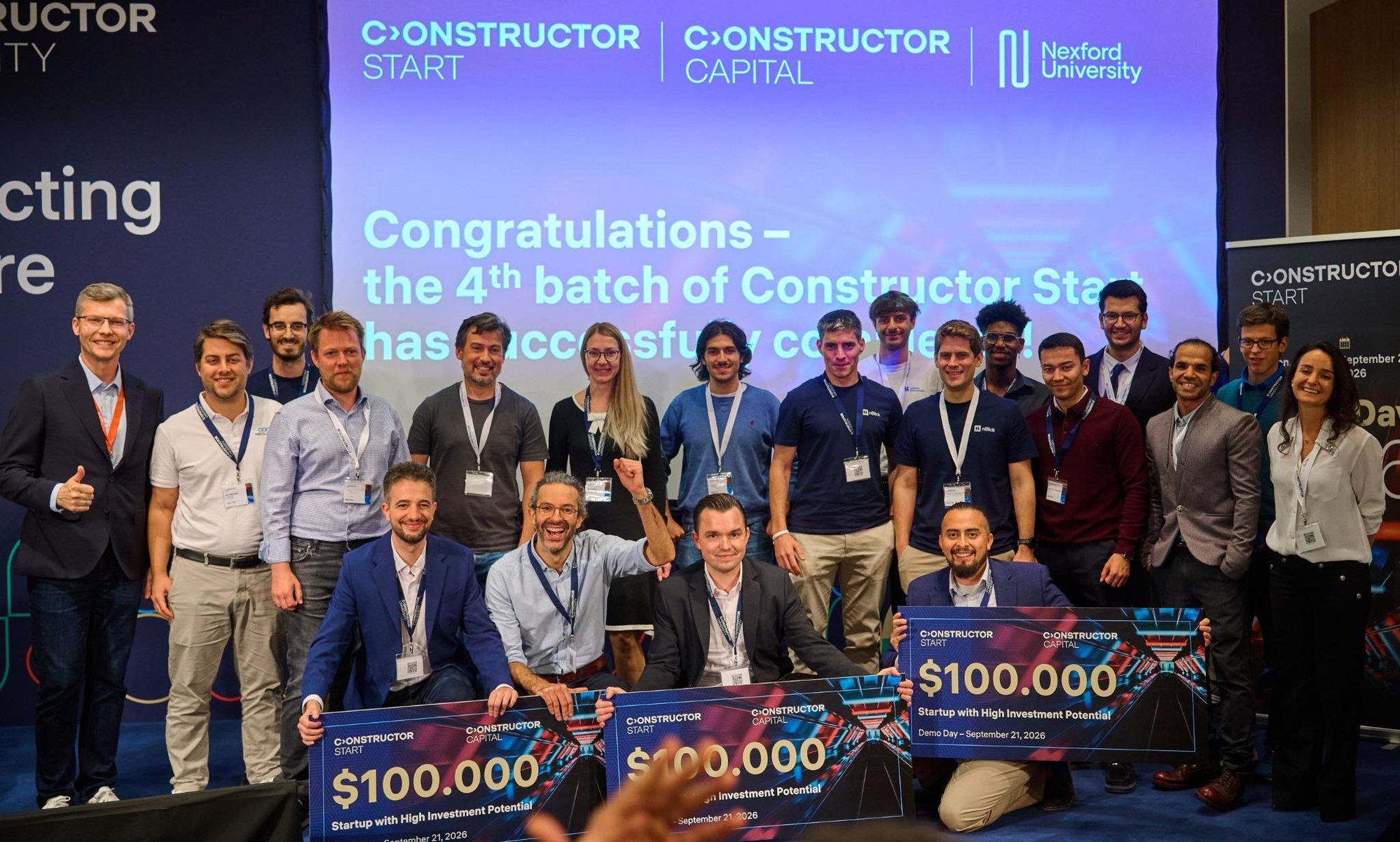
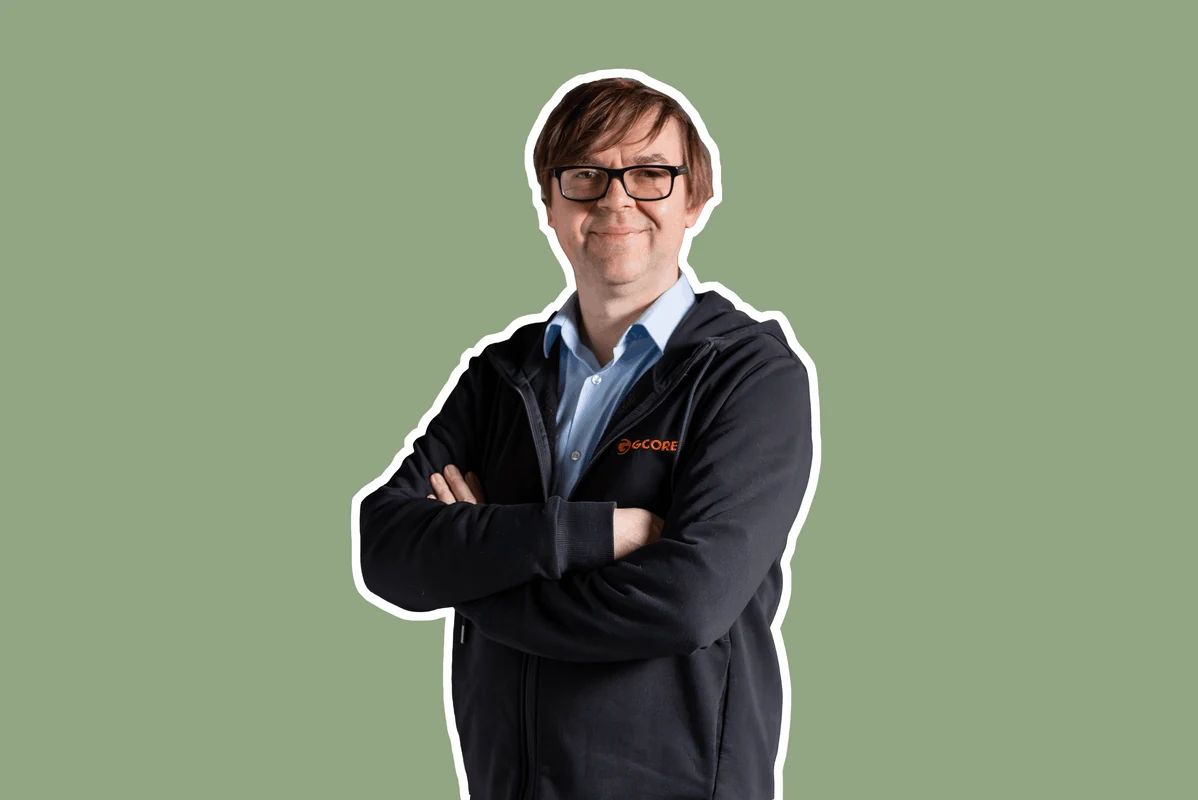
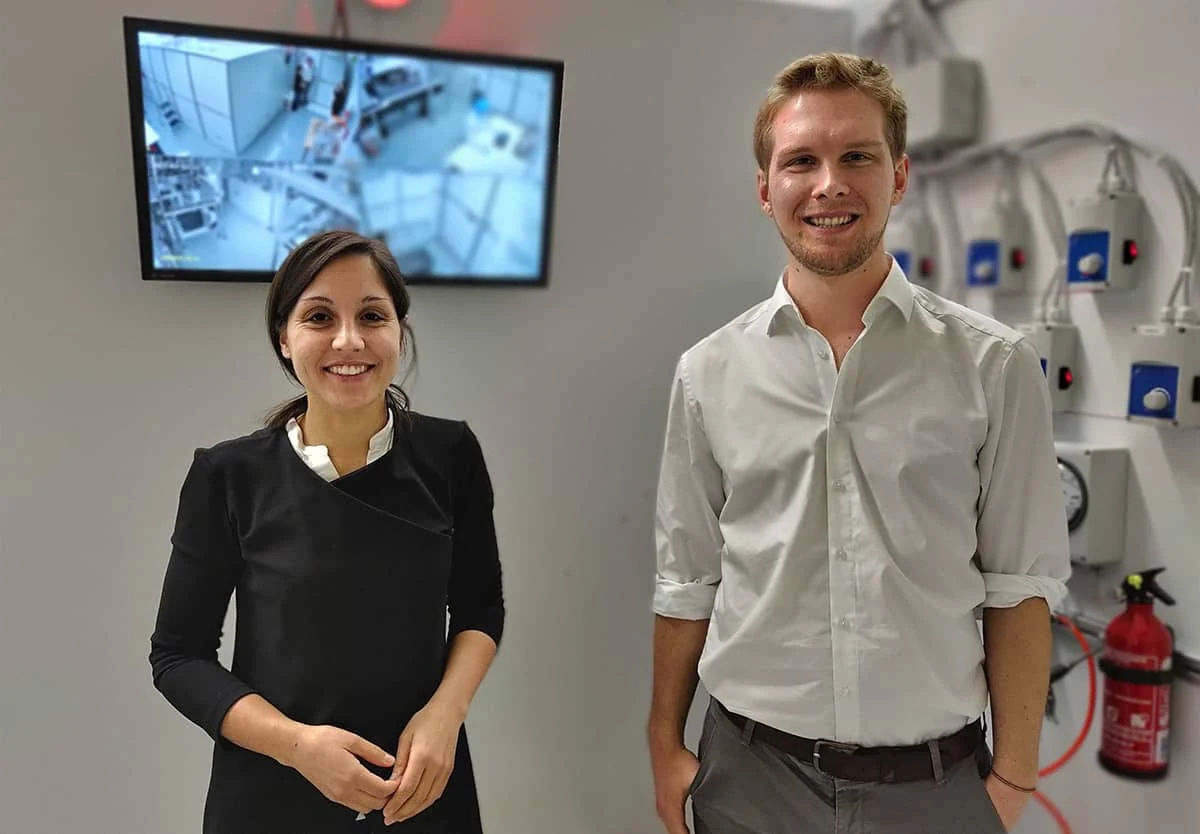
Ana Verkhoff and Dr. Valentino Jadriško attended from Constructor Capital. As always, the fund team was happy to invite and catch up with founders from portfolio companies Lumai, Akhetonics and Gcore. In the afternoon the group was taken into the garage to see the car up close.
Last weekend I watched our Constructor Racing team compete with its autonomous formula car at Imola – the track where F1 history was made, and where Senna died. I think I was watching a different kind of history being made.
Talking to the team before the race, I learned we were the smallest of the five teams on the grid – 25 teams entered, 5 qualified – lining up against Politecnico di Milano (PoliMOVE), TU Munich, Unimore and Kinetiz. Given the size gap, the team's view was that qualifying into the top five was already the success.
Constructor Racing finished 2nd. In my book, a huge result against names like these.
Dr. Valentino Jadriško, Constructor Capital
Senior leadership from Constructor University and Constructor Knowledge also attended, alongside academics from outside the group, including professors from the University of Bologna and the Pontifical Lateran University. Bringing founders, the fund, and the university side of the group together in the same paddock is harder than it sounds; the conversations it produced were a major reason to be there.
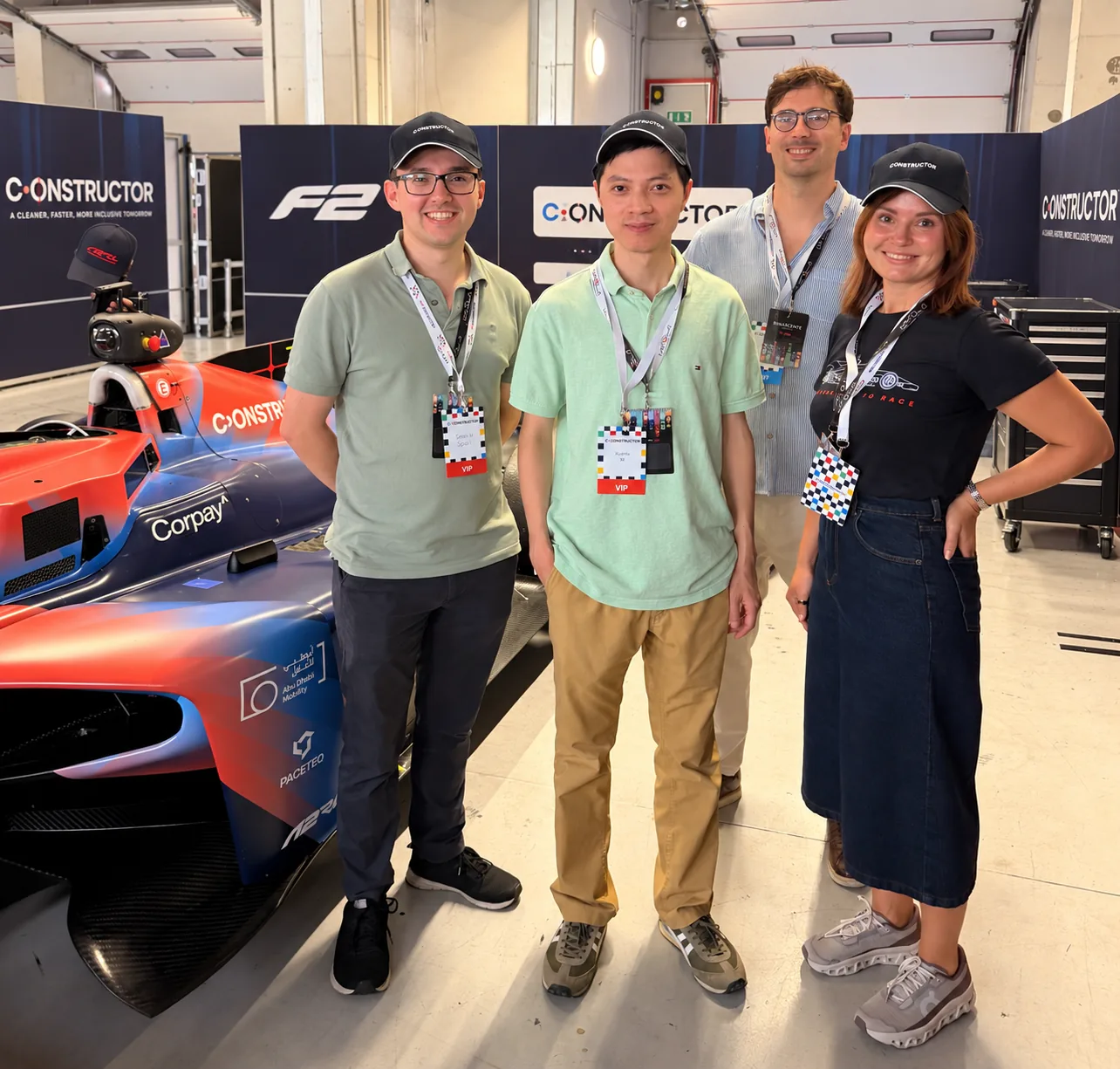
Despite a full day of racing and the heat, the grandstands filled for the autonomous event. The driverless cars drew unusual attention. Below is our deep dive on what happened and why it matters.
Identical cars, and the software is the only variable
For those who are less familiar with autonomous racing, this is one of the most demanding environments for AI today. Full-scale race cars, no human driver and identical hardware for every team. The difference is in intelligence, speed of learning and how well your system behaves under pressure. Every team at Imola runs the same EAV-25 platform, a Dallara Super Formula SF23 adapted for autonomy. Same sensors, same setup, and the same computing in every car, one workstation GPU and one sixteen-core server CPU. What each team writes is the stack that drives it, from perception and state estimation through planning to control. That makes the series a rare thing in motorsport: a comparison where the hardware is held constant and the software is the only variable.
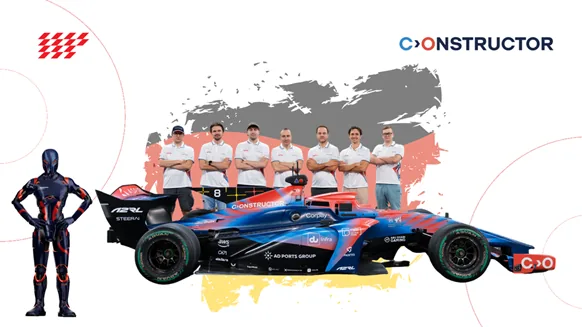
Ilya Shimchik, Team Principal of Constructor Racing, put it this way the day before the race: “Machines are the same, sensors are the same, computers, everything is the same, even the car setup is the same. Everything is identical, only software competes. AI against AI.”
Imola is a harder test than Abu Dhabi. It has elevation changes, narrow racing lines, gravel where Yas Marina has asphalt, and very little margin at the curbs. Teams had nine days of physical testing in conditions that included rain and, at one point, hail. A new wet-weather kit allowed all five cars to run in the wet.
How the race at Imola went
Constructor started from the back of the five-car grid, 3.964 seconds off Unimore’s pole time. Shimchik added: “25 teams entered; only five qualified.” Twelve laps later, it was one of only two cars still running.
TUM encountered a technical issue on the formation lap and returned to the pit lane before the rolling start, ending its two-season winning streak. Unimore led from pole and set the fastest lap before slowing abruptly with a technical issue. PoliMOVE, running within a second of the leader and having reached 252.3 km/h, could not avoid the back of the slowing Unimore car. Both were out. Kinetiz inherited the lead on lap four and held it to the flag, with Constructor taking second.
Constructor Team
At the inaugural A2RL race at Yas Marina in April 2024, Constructor qualified last of the four cars on the grid, 22.603 seconds off PoliMOVE’s pole. Both Italian cars stopped during the race. Constructor finished second, 27.2 seconds behind TUM, as one of only two cars to see the flag. At Imola it qualified fifth and finished second, again as one of two finishers. The change in qualifying pace is the more revealing number: the gap to pole fell from 22.603 seconds in 2024 to 3.964 seconds at Imola.
Constructor’s stated goal for the season, published on its A2RL team page before the race, was to become the field’s most reliable performer. Two of its three A2RL race appearances have ended with a second-place finish. The exception was the 2025 Grand Final, when Constructor did not finish after being hit by Unimore during an overtaking attempt.
The car is developed by Constructor Labs in collaboration with the robotics group led by Professor Andreas Birk at Constructor University in Bremen. According to the team, a compact group of engineers and researchers, supported by interns, works on the program.
Constructor Labs and Constructor University are siblings. Both sit inside Constructor Knowledge, which covers the education and non-profit side of the group, and Constructor Knowledge is one of the three pillars of Constructor Group alongside Constructor Tech and Constructor Capital. Constructor Labs works between the university and industry, taking research toward commercial use.
Two things are scarce. The first is data. “The most expensive thing is the data,” Shimchik says. “A race car on a racetrack at the limit of what it can do. There is very little open data like that. Really only the teams have it.”
The second is the hire. “You need someone who understands vehicle dynamics well. Someone who can write good code and knows how to write it. Someone who understands the algorithms and does the research. And all of it has to stay stable, and understand the infrastructure, the sensors, the hardware.” He calls it a narrow field lying across disciplines that are hard to cross.
From the track to the road
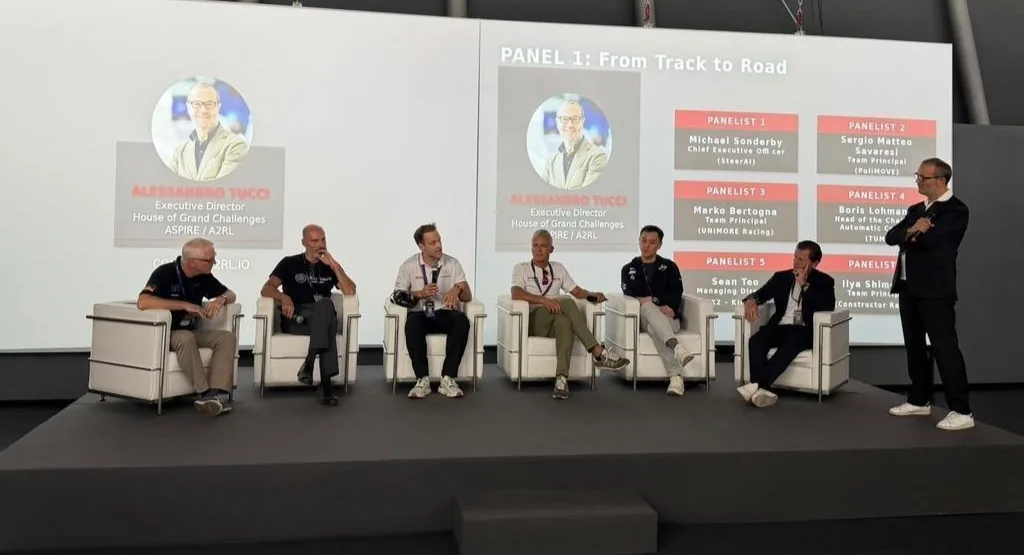
The weekend ran a conference alongside the racing, and the first panel was billed as From Track to Road. The program listed Shimchik alongside Sergio Matteo Savaresi of PoliMOVE, Marko Bertogna of Unimore Racing, Boris Lohmann of TUM, Sean Teo of Kinetiz, and Michael Sonderby, CEO of SteerAI. Alessandro Tucci of ASPIRE’s House of Grand Challenges hosted the discussion.
The title poses the question worth asking of the series. Racing is a demanding place to develop software. Which parts of it leave the circuit is a separate test, and it is the one that decides whether any of this is worth funding.
Shimchik places the work in a sequence the audience already knows. “People first learned about AI when it won at chess. Then AI beat the champion at Go, and it turned out AI has some intuition, that it can think tactically. And now Physical AI is starting, where AI is better than a human in the physical world.”
Driverless racing is the version people can watch. Constructor puts its own performance envelope at wheel-to-wheel autonomous racing at speeds of up to 300 km/h.
According to Shimchik, the transfer targets are specific. He says Constructor Labs is working with Drako Motors, the Silicon Valley maker of the GTE and Dragon electric supercars, on emergency obstacle avoidance. Drako runs its own architecture, DriveOS, on a single ECU, and Shimchik says the platform is specific enough that a standard OEM stack does not fit it. He also describes two further concepts closer to a product: a safety system for track days, where software that knows the limits of the car could intervene to prevent a crash, and an AI racing coach for karting academies, allowing drivers without a personal trainer to learn from a system that already knows how to drive.
Shimchik also sees potential links with Constructor Capital portfolio companies, taking the same work from the lab toward production.
Who gets to build these systems
Dr. Jadriško spent part of the day speaking with Professor Andreas Birk, whose robotics group at Constructor University Bremen works alongside the racing team. What stayed with him had less to do with lap times than with the relationship between human expertise and the capabilities of the systems people build.
But one thing has stuck with me since. The team built an AI driver this fast without a single racing driver, or even a track-day driver, on the team. We now live in a world where non-domain experts can build AI models that perform on par with human domain experts. Think about what that means for every other domain.
Dr. Valentino Jadriško, Constructor Capital
The distinction matters: building an expert-level system does not necessarily require its builders to perform the task at expert level themselves. It still requires deep technical and domain understanding across the team, but it changes how that expertise can be assembled. For a deep-tech investor, that is a question about the shape of teams as much as the shape of technology.
What Imola showed
The pace is close to settled. A2RL cars lapped ten seconds off a professional driver at Suzuka in 2024. At Yas Marina in
The pace gap has narrowed sharply. At Suzuka in 2024, A2RL’s autonomous car was about ten seconds off former Formula 1 driver Daniil Kvyat. At Yas Marina in November 2025, Kvyat’s best lap was 57.57 seconds and TUM’s autonomous car recorded 59.15, a gap of 1.58 seconds. At Imola, A2RL reported the fastest autonomous race lap at 1 minute 40 seconds, but its official race report did not publish a directly comparable human benchmark.
Reliability remains less settled. Three of five cars did not complete the Imola race: TUM returned to the pits after a technical issue on the formation lap; Unimore stopped while leading after another technical issue; and PoliMOVE then collided with the slowing Unimore car. The incidents were not defeats in a clean software-to-software race, but they are still part of the engineering challenge: building a complete autonomous racing system that can survive a live race at speed.
That is also the part most likely to transfer. Perception, planning, and control systems that hold together under those conditions can inform road-vehicle safety when something goes wrong at speed. The full race is available online. A2RL returns to Yas Marina Circuit for the next round, and the lessons from Imola feed back into the program. Second place is the result; finishing twice from the back of the grid is the more useful signal.