Saikat Guha on Hybrid Quantum Computing: Combining Photons and Matter Qubits


 Back to top
For years, progress in quantum computing has been measured largely at the level of the qubit. Superconducting circuits, trapped ions, neutral atoms, photonics and solid-state approaches are compared by fidelity, coherence, error rates and their prospects for scaling.
Those comparisons still matter. But as individual components improve, a different set of constraints comes into focus. A useful quantum computer requires much more than high-performing qubits. Entanglement has to be generated and distributed. Errors have to be corrected. Components need to communicate, operate together reliably and eventually be manufactured at meaningful scale.
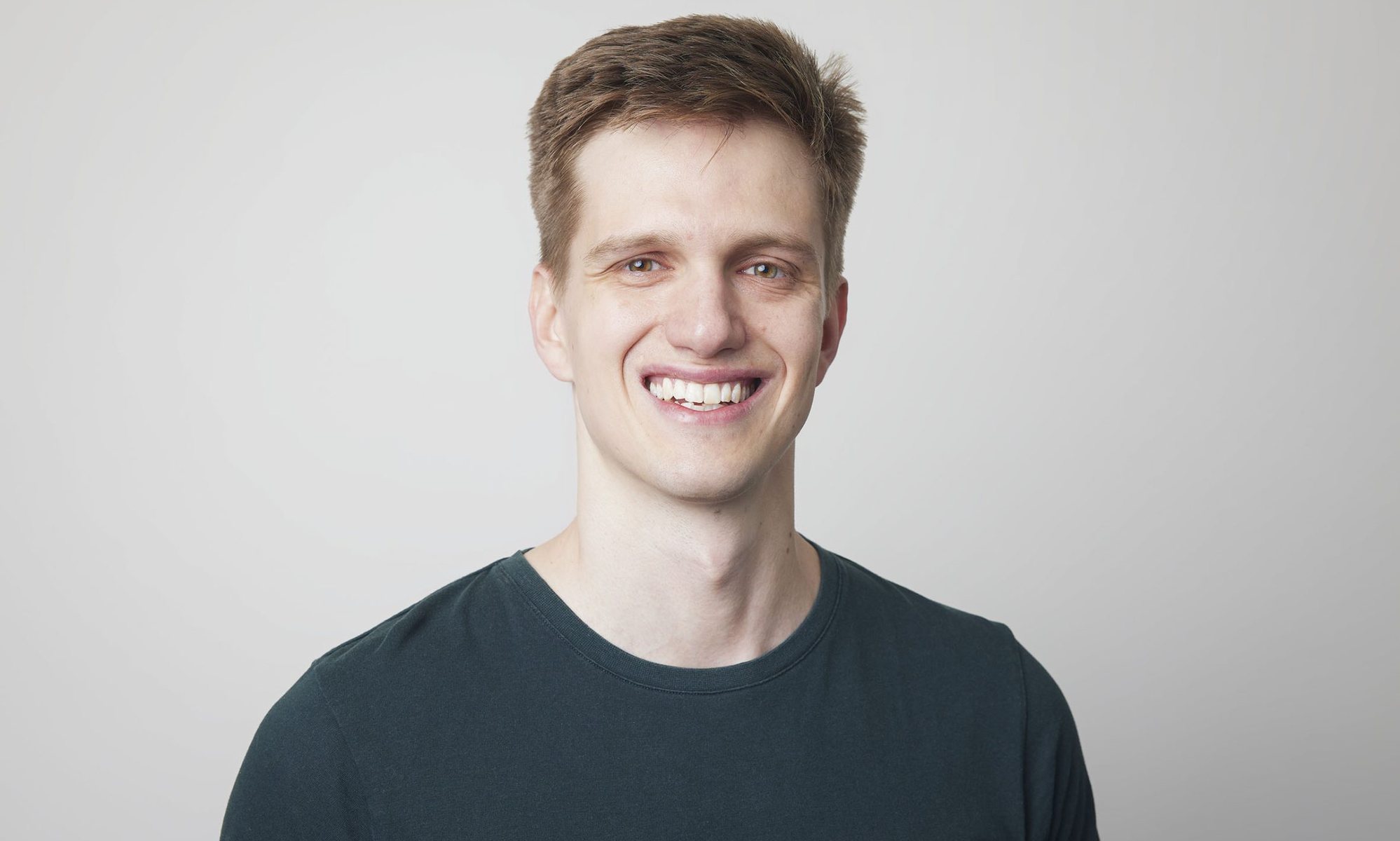
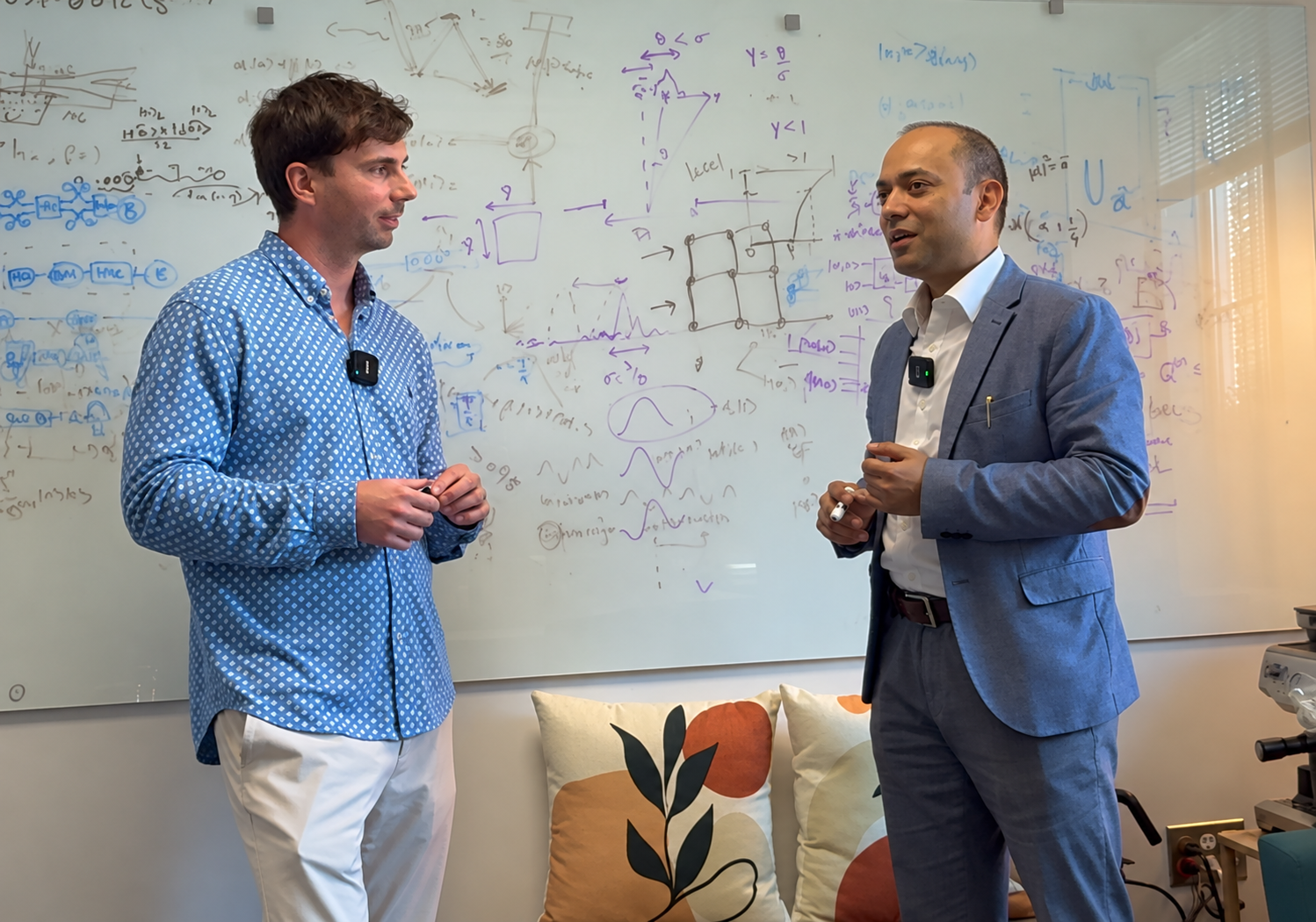
On the sidelines of Quantum World Congress, at the University of Maryland in College Park, Valentino Jadriško of Constructor Capital discussed this transition with Saikat Guha, Clark Distinguished Chair Professor of Electrical and Computer Engineering at the University of Maryland and Director of the NSF Center for Quantum Networks. Guha’s work centres on photonic quantum information processing: treating light as a quantum mechanical object to push the limits of communications, sensing, imaging and computing.
The shift is subtle but important. Quantum computing is becoming as much a problem of system architecture as a problem of qubit performance.
Quantum Hardware Trade-offs: Trapped Ions, Neutral Atoms and Color Centers
No major quantum platform is strongest across every dimension.
- Diamond color centers can be integrated onto photonic chips in large numbers, but two-qubit gates between separate color centers remain extremely hard.
- Trapped ions can support high-quality quantum logic, while their efficiency in interfacing with optical photons remains limited.
- Neutral atoms offer both strong optical interfaces and quantum logic, but moving atoms into the regions where operations take place introduces another engineering challenge.
- Color centers in silicon are CMOS-compatible and can tap decades of semiconductor know-how, but do not yet match diamond on coherence or fabrication maturity.
Guha summarises the situation simply: “There’s all these pros and cons right now between different qubit forms.”
Scaling Quantum Computers Beyond Qubit Performance
Those trade-offs matter more as the industry moves beyond isolated demonstrations.
A processor can have excellent qubits and still face difficult problems elsewhere in the architecture. Large entangled states remain challenging to prepare. Optical systems have to manage photon loss and probabilistic processes: with conventional approaches, entangling two photonic qubits succeeds at best half the time, and building even a three-photon entangled state from single photons has a fundamental success limit of one in 32. Error correction can require substantial physical overhead. Interfaces between components can become bottlenecks of their own.
This changes the meaning of scale. Adding more qubits is only one part of it. The surrounding system has to scale with them.
The Engineering Challenges of Scalable Quantum Computing
Quantum computing still depends on fundamental scientific progress, but many of the problems now coming into focus are problems of integration.
“We are at the point in the journey where the next step is an engineering challenge.”
Guha makes that assessment after discussing progress in qubit quality, spin-photon interfaces, quantum logic and scalable linear optics. The engineering challenge sits in how those capabilities are assembled.
- How efficiently can entanglement be generated?
- How is quantum information moved between processors?
- How much physical hardware is required to create useful logical qubits?
- Which components can rely on established semiconductor or telecom manufacturing processes, and which will require entirely new infrastructure?
These questions can determine whether an architecture that works in a laboratory can become a practical system.
How Photons and Matter Qubits Enable Hybrid Quantum Computing
One route to scale is to improve every component of a single hardware platform. Another is to make better use of technologies that already solve different parts of the problem well.
Photonics and matter-based qubits illustrate the logic.
Photons are well suited to transmitting quantum information. Matter qubits, meanwhile, from trapped ions and neutral atoms to atom-like defects such as color centers and quantum dots, can provide interactions and quantum logic that light alone cannot.
“The [matter] qubits that talk to photons, they bring in very useful nonlinear interactions in the optical domain that light does not possess on its own.”
That distinction is not merely theoretical. Guha gives an example from laser communications, where adding matter qubits to an optical processor can expand what the system can do beyond linear optical processing and photon detection alone.
Photonic Cluster States and Fault-Tolerant Quantum Computing
The same logic is reshaping photonic quantum computing itself. Companies such as PsiQuantum and Xanadu use a measurement-based model, in which a large entangled “cluster state” is woven continuously at one end and consumed by measurement at the other, much like a weaving machine. The model suits photons, which are fast, stable and interfere well.
The difficulty is preparing the small entangled building blocks. With probabilistic photon sources, near-deterministic generation can require hundreds of thousands of multiplexed sources.
Matter-based emitters such as quantum dots and color centers change that equation, because they are qubits themselves and can stitch photons into cluster states deterministically. Guha and his University of Maryland colleague Edo Waks have recently shown that the idea also works in reverse. Small photonic cluster states that stay entangled with the emitters’ spins can be sent through standard linear optics and measured, building continuous, deterministic entanglement across the matter qubits:
“…from which you can carve out a fault-tolerant resource for quantum computing.”
Scaling Quantum Hardware With Semiconductor and Telecom Infrastructure
The same systems perspective extends to infrastructure.
Technologies compatible with mature industrial platforms can inherit decades of engineering development. Silicon brings established fabrication processes and a large semiconductor ecosystem. Optical quantum systems can draw on fibres, modulators and other components developed for telecommunications.
Guha specifically points to the value of building on “existing well-researched, well-developed infrastructure.” He is also clear about the limits of that approach: the quantum industry will eventually need components of its own, and manufacturing them at scale will have to be thought through carefully.
For quantum companies, that makes integration strategy part of the technical roadmap. The relevant question is not only whether a component performs well in the lab, but whether it can fit into an architecture that can realistically be built and scaled.
Hybrid Quantum Processors and Quantum Networks
Different strengths across hardware platforms also leave room for systems in which technologies take on specialised roles.
A processor that couples well to light could sense an environment or pick up a weak incoming laser signal, while another performs the computation on it. In a quantum network, different nodes could be chosen for scalability or for error correction.
Guha gives a concrete example: a quantum repeater could use scalable color-center nodes across part of a network and later shift the burden of error correction to trapped ions with stronger error-correction capabilities. He concludes that “there’s all sorts of reasons for hybrid processors,” while stressing that it remains too early to know where different processors will ultimately find their place. His group is already working in this direction under DARPA’s HARQ programme, using a programmable time-domain photonic architecture to entangle different types of quantum memories.
That uncertainty is important. The argument is not that hybrid architectures have already won. It is that a winner-takes-all view of quantum hardware may be too narrow.
What Quantum Architectures Can Learn From Classical Computing
Classical computing offers a useful comparison. CPUs, GPUs, specialised accelerators, different types of memory and networking hardware coexist because no single architecture is optimal for every task. Guha makes the same analogy when discussing the future of quantum infrastructure: mature computing systems are already diverse, and quantum technologies may eventually settle into similarly specialised roles.
What Hybrid Quantum Computing Means for Investors
From Constructor Capital’s perspective as an investor, this shifts the question from which qubit modality will win to which companies control the bottlenecks that every scalable system will need to solve. That may include connectivity, photonics, control, error correction, fabrication and interfaces between hardware platforms. In a market where the final architecture is still uncertain, owning a critical enabling layer can be as strategically important as building the processor itself.
This also changes how quantum companies can be evaluated. Technical performance remains essential, but so do manufacturability, dependence on specialised infrastructure, compatibility with existing supply chains and the ability to solve a bottleneck that persists across more than one hardware architecture.
The companies that matter most may not all be building complete quantum computers.
Much will still depend on which architectures prove useful outside the laboratory. As Guha puts it:
“The most important, most valuable things will find their way. And then, obviously, the industry and the use cases will drive the maturation at scale.”
The race to improve qubits is far from over. But the next phase of quantum computing will increasingly be decided by what can be built around them.